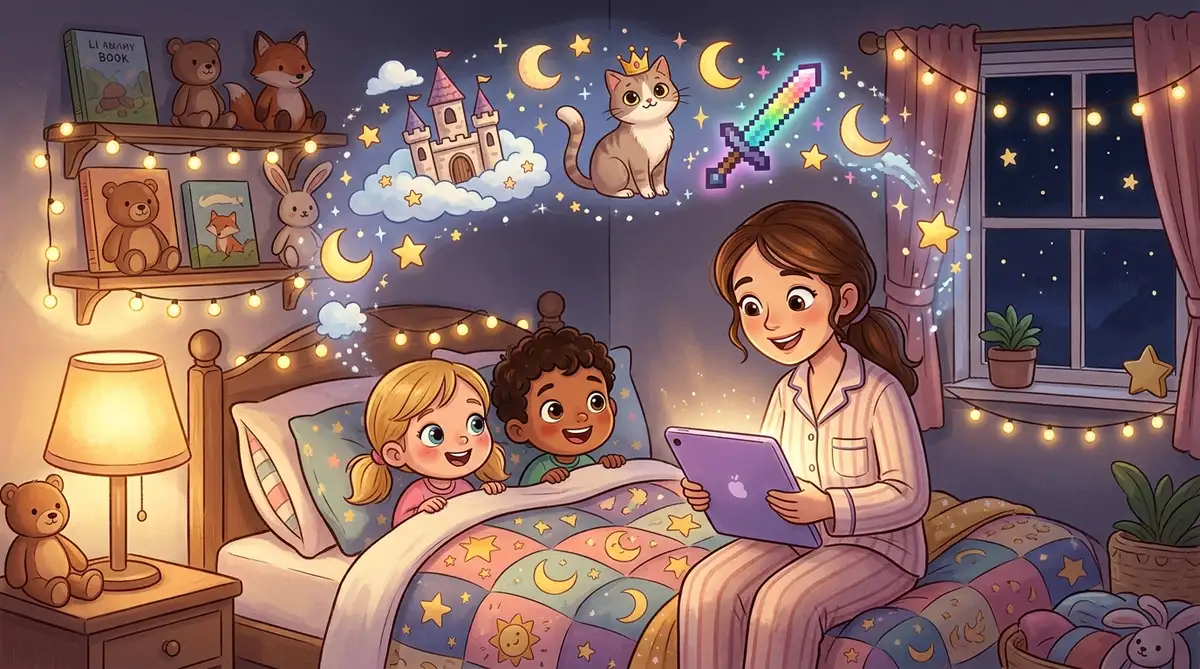

AI Craft Projects for Kids: When Your 7-Year-Old Runs Out of Ideas (But You Haven't)
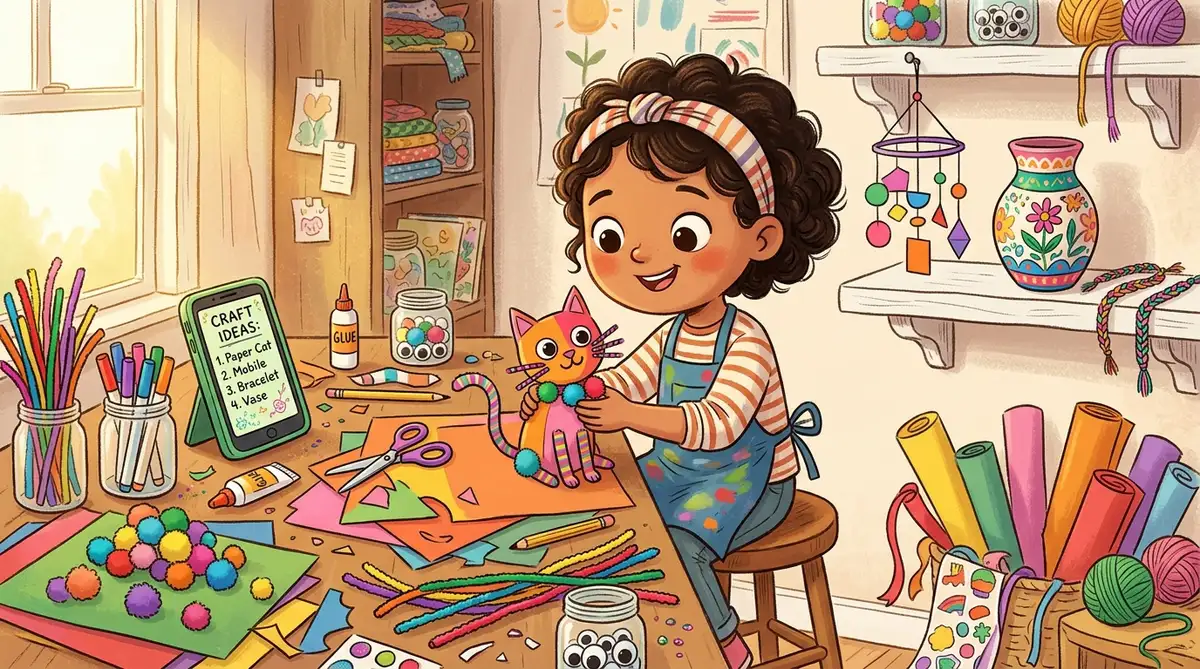
“I’m bored and I have no ideas” is what our daughter says approximately every 47 minutes on a rainy day.
I have craft supplies and ideas, but either we lack ingredients, she lacks the skillset, or it’s too simple and she’ll abandon it in four minutes.
There’s no in-between. Until there was.
The Problem (And It’s More Common Than You Think)
“I’m bored” isn’t boredom. It’s: I want something hands-on, I have no idea what, I need you to tell me RIGHT NOW.
You can’t make up good projects on the fly. You need time to think. You need to know what’s in the house. You need to match difficulty to what they can handle.
Pinterest overwhelms (three-hour projects, missing supplies). Google offers 2009 ideas. Your brain at 2 PM is empty.
Kid stays bored. You’re frustrated knowing something perfect exists, but you can’t think of it.
That’s where AI changes the game.
The Prompt Formula
After dozens of tries, we landed on a formula that consistently generates projects that actually work. Here’s what we use for our daughter:
Generate a craft project for an 8-year-old girl interested in cats, 3D printing, and color. Using supplies: colored paper, markers, glitter, stickers, construction paper, scissors, glue, tape. Difficulty level: intermediate. Time to complete: 45 minutes. Include: step-by-step instructions, what the finished project looks like, and suggestions for displaying or giving it as a gift.
Within 10 seconds: a project. A good one. Something she can actually do with supplies we have.
**Your craft project prompt:**

Generate a craft project for a [AGE]-year-old [boy/girl] interested in [INTERESTS].

Using supplies: [list what you actually have, be specific]

Difficulty level: [BEGINNER/INTERMEDIATE/ADVANCED]

Time: [15 MIN / 30 MIN / 1 HOUR / AFTERNOON]

Include: step-by-step instructions, what finished looks like, and display suggestions.

Pro tip: The more specific you are about supplies and interests, the better the suggestions.
Example Projects AI Generated (That Actually Worked)
Project 1: “Cat Decoration Mobile” Supplies: construction paper, markers, scissors, glue, tape Steps: draw 5 cat shapes on construction paper, color them different colors, cut them out, fold a strip of paper into a hanger bar, tape strips of paper at different lengths, glue cats to the ends Time: 40 minutes Display: hang in bedroom window with tape Outcome: she made it, it looks great, it’s been hanging for two months
Project 2: “3D Paper Sculpture Animal” Supplies: construction paper, colored paper, markers, scissors, tape, glue Steps: draw and cut large body shapes from construction paper, fold and overlap pieces to make a 3D form, tape edges together, add details and patterns with markers Time: 60 minutes Display: shelf or desk Outcome: she made an elephant. It’s… weird. But she loves it.
Project 3: “Glitter Sticker Collage Cards” Supplies: construction paper, markers, glitter, stickers, glue, scissors Steps: fold construction paper into card shape, sketch a design with markers, trace glue lines over the design, sprinkle glitter and shake off excess, add stickers as accents Time: 30 minutes Display: give as gifts, display on the fridge, start a collection Outcome: she made six. They’re everywhere. She shows them to everyone.
Project 4: “Paper Cat Bookmark Collection” Supplies: colored paper, markers, stickers, scissors, tape Steps: cut paper into bookmark strips, draw a different cat face on each one, add stickers for decoration, fold the top into a triangle to clip over pages, reinforce with tape Time: 20 minutes Display: use it, gift it, start a collection Outcome: she made five in one sitting and gave them as gifts
The pattern: projects match her interests (cats, making, colors), use supplies we have, aren’t too simple or hard, finish in reasonable time.
- List 5-10 supplies you actually have in your craft area (be specific)
- Think about what your kid is currently interested in
- Decide how much time you have (15 min / 30 min / 1 hour / afternoon)
- Write the prompt with all three variables
- Generate the project
- Read through it to make sure you have the supplies
- Gather supplies and present the idea: “Want to make this?”
- Let them run with it (you’re a helper, not the director)
The Skill-Level Matching Thing
Be honest about skill level.
Our daughter is intermediate. She follows steps, handles scissors and glue, decides colors and placement. She can’t do tiny details or precision work.
“Beginner” bores her. “Advanced” frustrates her. “Intermediate” = happy.
When she got frustrated (too much precision), I re-prompted for “beginner.” She needed skill-matched projects, not age-matched.
Your 6-year-old might be advanced. Your 10-year-old might be beginner. Age doesn’t matter. Match the actual skill.
The Supplies Reality Check
AI suggests projects using supplies you list.
I don’t list “paint and canvas” if we don’t have paint. I don’t list “beads” if I want to avoid tiny chaos. I list: colored paper, markers, glitter, stickers, scissors, glue, tape.
That’s what we have. That’s what we use. AI generates projects with only those.
No frustration. No “we don’t have the supplies.” No buying constantly.
The supplies list seems limiting. It’s not. It’s clarifying. Dozens of projects come from basic supplies. AI figures out which ones.
How to Sneak Learning In
Every craft teaches something: cutting, scissor control, color theory, spatial reasoning, sequencing, deciding, problem-solving.
Our daughter doesn’t realize she’s learning. She’s making something cool.
One mobile taught sequencing. One sculpture taught 3D thinking. One decoration taught color combinations.
You’re not trying to teach. The craft teaches.
The Supply Refresh
Every few months, new supplies arrive. Aqua markers instead of blue. Metallic paint pens. Different colored paper. New stickers.
When that happens, update your supply list and re-generate. You’ll get projects that use the new stuff.
It keeps projects feeling fresh even though the core supplies are the same.
Real Talk: This Isn’t About Avoiding Boredom
Boredom is good. It makes kids creative. But “I’m bored” at 2 PM on a rainy day is different. That’s “I want to create something and need a starting idea.”
AI is the starting idea.
The kid does the work. The kid makes decisions (colors, sizes, what to do when something breaks). You provide structure so they focus on creating, not figuring out what to create.
Your kid can learn to use this prompt themselves once they’re old enough to type. Our daughter now generates her own craft ideas and shows them to us: “Can we make this?” Teaching them to AI-prompt is a real life skill. Read: Custom Bedtime Stories with AI for more on how we build AI into family routines.
Try it today. Look at what’s actually in your craft area. List five supplies. Think about one thing your kid likes. Write the prompt. See what you get. Worst case: a mediocre idea and you’re back where you started. Best case: an hour of focused creativity that didn’t exist 30 minutes ago.
Share this article
If this helped, pass it along.